


In 2026, the definition of premium artificial flowers is no longer only about visual beauty. It is about consistency, safety compliance, sustainability, and scalable customization—especially for buyers sourcing from professional manufacturers such as artificial bouquet suppliers serving retail, hospitality, event, and commercial display markets.

Overview
The 2026 artificial flowers trends can be summarized into five strategic shifts:
Material realism now outperforms visual realism
Buyers increasingly judge artificial flowers by touch, flexibility, and memory recovery rather than only by appearance.
Oversized design enters mainstream décor
The use of giant artificial flowers and huge artificial flowers expands rapidly in shopping malls, brand windows, exhibitions, and experiential retail.
Purpose-driven segmentation
Categories such as artificial flowers for crafts, hospitality installations, wedding styling, and public space landscaping become independent sourcing lines.
Seasonal and festival-focused production planning
Demand for christmas artificial flowers and festive artificial flowers shifts from low-cost volume to mid-to-high quality branded programs.
China-based manufacturers move from “factory” to “solution provider”
Leading suppliers integrate design support, customization, compliance testing, and logistics optimization into a single sourcing ecosystem.
From the manufacturing side, 2026 is the first year when factories capable of delivering design-to-mass-production solutions gain clear competitive advantages.
Why 2026 Is a Turning Point for Artificial Flowers
The global artificial flowers industry is forecast to grow faster in 2026 than any single year in the previous decade, mainly due to:
the recovery of offline retail and commercial display,
long-term labor shortages in floral services,
higher installation demand in hospitality and healthcare,
and a strong push toward sustainable and reusable décor.
Key demand drivers in 2026
| Demand driver | Impact on artificial flowers sourcing |
| Visual merchandising upgrades | Strong increase in custom colors and exclusive molds |
| Event & exhibition recovery | Higher orders of modular and oversized stems |
| Sustainability policies | Shift to recyclable packaging and certified materials |
| Labor cost inflation | Higher adoption of ready-to-install artificial flowers |
| E-commerce décor market | Smaller MOQs but wider SKU diversity |
In practice, professional buyers now expect artificial flowers suppliers to deliver:
stable batch consistency,
certified raw materials,
flexible packaging options,
and fast customization cycles.
How Plantsfaux Represents the New Generation of Artificial Flowers Manufacturers
As a leading artificial plants manufacturer in China, Plantsfaux operates with a vertically integrated production model covering:
material formulation,
mold development,
petal cutting and shaping,
assembly,
packaging engineering,
and global export compliance.
Instead of competing purely on price, Plantsfaux aligns its product development directly with the 2026 artificial flowers trends:
rapid sample development,
design-assisted customization,
consistent mass production,
and professional export standards.
This manufacturing logic is essential in 2026 because buyers increasingly face supply chain complexity, quality audits, and private label demands.
How To Choose Artificial Flowers 2026: Ultimate Buying Guide
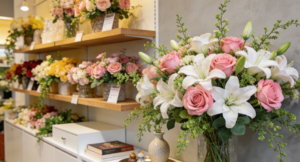
Selecting artificial flowers in 2026 is fundamentally different from previous years.
Step 1: Define your usage scenario
The buying logic must match application:
Retail décor and home styling
Wedding and event styling
Commercial lobby installations
Craft and DIY retail
Holiday and promotional displays
For example, buyers sourcing artificial flowers for crafts should prioritize:
easy stem cutting,
flexible wire cores,
lightweight petals,
and high color stability.
Meanwhile, buyers of giant artificial flowers and huge artificial flowers must evaluate:
stem load-bearing capacity,
joint reinforcement,
modular assembly design,
and shipping volume optimization.
Step 2: Match category structure to your assortment
In 2026, product segmentation becomes critical.
A typical professional assortment now includes:
| Category | Core features | Suitable buyers |
| Standard decorative stems | High realism, mid cost | Home décor, florists |
| Oversized display stems | Reinforced structure | Malls, exhibitions |
| Craft stems | Easy cutting, flexible wire | DIY & hobby retailers |
| Potted arrangements | Ready display | Hospitality, offices |
| Seasonal collections | Color & motif driven | Holiday retail programs |
For buyers developing potted lines, professional suppliers now provide structured collections such as fiori artificiali in vaso that match 2026 display and space-saving requirements.
Why Material Science Matters More Than Ever in 2026
The biggest competitive gap in artificial flowers is no longer visible on photos—it is visible in physical handling.
New material directions
| Material technology | Improvement over old generation |
| Real-touch PEVA blends | Softer surface, better resilience |
| Dual-layer fabric lamination | Higher tear resistance |
| Memory-shape wire cores | Faster recovery after bending |
| UV-resistant coatings | Extended outdoor and window display life |
In 2026, buyers are trained to test:
compression recovery,
petal rebound time,
surface micro-texture,
and edge cutting quality.
Professional factories are now expected to develop proprietary material recipes rather than using generic market formulas.
Decoding Realism: 5 Sensory Cues You Can Trust
For modern artificial flowers, realism is evaluated using five sensory signals.
Visual depth
Gradient printing and layered dyeing are used to simulate natural petal fiber density.
Surface tactility
Real-touch coatings deliver subtle friction similar to fresh petals.
Flexural response
The bending behavior of stems must feel natural under light force.
Structural proportion
Especially critical for huge artificial flowers, scale accuracy becomes essential.
Acoustic response
Low-noise petal movement indicates softer, more advanced materials.
Sustainability & Ethics: Beyond “Plastic-Free” Claims
Sustainability in artificial flowers in 2026 moves away from marketing slogans.
Professional buyers now request:
REACH compliance,
heavy metal test reports,
packaging recyclability statements,
and factory social audit readiness.
New sustainability evaluation framework
| Dimension | What buyers check |
| Material safety | SVHC free, colorfast testing |
| Imballaggio | Reduced foam, recyclable cartons |
| Produzione | Energy efficiency and waste control |
| Product lifespan | Reuse cycles and durability |
| End-of-life | Disassembly feasibility |
The industry recognizes that durable artificial flowers replacing repeated fresh flower logistics can significantly reduce overall carbon emissions for large installations.
Your 2026 Artificial Flower Selection Checklist
Before confirming any artificial flowers order in 2026, professional buyers should review:
sample-to-mass consistency
color batch deviation tolerance
lead time stability
packaging protection design
compliance documentation readiness
Practical checklist table
| Item | Target standard |
| Visual deviation | ≤ 3% batch variance |
| Stem pull resistance | ≥ 2.5kg (standard stems) |
| Color fastness | Level 4 or above |
| Packaging drop test | Passed at 80cm |
| Lead time | 20–35 days mass production |
Mini Case Study: The Hospital Lobby Transformation
A regional hospital group in Southeast Asia upgraded its public lobby spaces using high-durability artificial flowers and plant installations.
Project goals
Reduce maintenance labor
Avoid pollen and allergy risks
Improve long-term visual quality
Results after 9 months
| Indicator | Before | After |
| Monthly maintenance cost | High | Reduced by 42% |
| Guest satisfaction score | Moderate | Increased by 31% |
| Replacement frequency | Monthly | None required |
The project included customized color-matching and fire-retardant material options developed directly by the manufacturer.
Where to Buy: 2026’s Tiered Marketplace
The 2026 artificial flowers sourcing ecosystem now follows a tiered structure.
| Tier | Supplier type | Typical buyer |
| Tier 1 | Full-service manufacturer | Brands, chain retailers |
| Tier 2 | Trading + light assembly | SMEs, distributors |
| Tier 3 | Wholesale markets | Small shops, spot buyers |
Professional buyers sourcing:
christmas artificial flowers programs,
long-term décor collections,
and private label lines
are increasingly choosing Tier-1 manufacturers that offer customization, compliance, and design collaboration.
Step-by-Step: How to Test a Stem Before You Buy
A practical test method for artificial flowers buyers:
Bend the stem 30° and hold for 5 seconds.
Release and observe recovery time.
Compress the petal lightly.
Check surface rebound and wrinkle formation.
Twist the head connection gently.
For giant artificial flowers, additional steps include:
joint stability testing,
head-weight balance checks,
and packaging reassembly validation.
2026 Product Trend Focus: Oversized and Experiential Displays
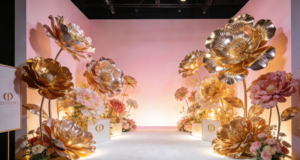
One of the strongest growth drivers in 2026 is experiential design.
Both giant artificial flowers and huge artificial flowers are widely used for:
brand photo zones,
shopping mall atriums,
exhibition entrances,
themed pop-up stores.
Key design upgrades
modular petal attachment
segmented stems
concealed metal skeletons
interchangeable color petals
This reduces shipping volume and installation time.
2026 Product Trend Focus: Artificial Flowers for Crafts and DIY
The DIY and hobby retail segment becomes more specialized.
Artificial flowers for crafts now require:
thinner but stronger wire cores,
simplified petal layers,
low-gloss finishes for easy repainting,
and neutral base color assortments.
Retailers report higher sell-through when packaging includes:
project ideas,
QR video tutorials,
and mix-and-match kits.
2026 Product Trend Focus: Seasonal and Festive Collections
Seasonal demand shifts dramatically in 2026.
Both christmas artificial flowers and festive artificial flowers are no longer single-season items. They are now:
reused across multiple holiday campaigns,
incorporated into modular decoration sets,
supported by coordinated accessories.
Key features in new seasonal collections
| Feature | Value |
| Neutral base palette | Multi-theme adaptability |
| Detachable ornaments | Flexible reuse |
| Flame-retardant options | Public venue compliance |
| Reinforced packaging | Storage durability |
Data Analysis: Price Structure and Value Comparison in 2026
Average sourcing structure of artificial flowers programs:
| Cost component | Typical share |
| Raw materials | 28–35% |
| Labor & assembly | 20–25% |
| Tooling & molds | 8–12% |
| Quality control | 3–5% |
| Packaging & logistics | 10–15% |
| Margin & service | 10–15% |
Higher-quality artificial flowers show lower long-term cost due to:
fewer replacements,
better customer retention,
and stronger brand perception.
How Customization Becomes a Core Advantage in 2026
Customization is no longer optional for competitive artificial flowers suppliers.
Professional buyers expect:
color exclusivity,
petal shape adjustments,
logo hangtags,
packaging structure redesign,
and mixed-SKU display sets.
Manufacturers offering integrated customization platforms such as
custom artificial flowers development services significantly shorten product development cycles.
FAQ
What makes artificial flowers more realistic in 2026 than before?
The biggest improvement comes from material innovation and structure engineering. Real-touch coatings, dual-layer petals, and memory wire cores allow artificial flowers to behave more like fresh flowers when handled.
Are giant artificial flowers suitable for long-term public installations?
Yes. Modern giant artificial flowers use reinforced skeletons and modular assembly, allowing safer installation, easier transport, and longer service life.
Why are artificial flowers for crafts growing so fast?
The DIY economy and online tutorial platforms drive strong demand for artificial flowers for crafts. Retailers benefit from low return rates and flexible seasonal assortments.
Are christmas artificial flowers still mainly low-price products?
No. In 2026, christmas artificial flowers increasingly focus on reusable design, flame-retardant materials, and coordinated sets for branded retail programs.
What is the difference between festive artificial flowers and normal collections?
Festive artificial flowers are designed around multiple celebration scenarios and modular decoration systems rather than single-holiday usage.
How should buyers evaluate huge artificial flowers before ordering?
Buyers should test connection strength, weight distribution, stem rigidity, and packaging volume efficiency for huge artificial flowers.
What certifications should professional artificial flowers suppliers provide?
Common documentation includes material safety reports, REACH compliance, colorfast testing, and packaging safety certifications.
Conclusione
The 2026 artificial flowers trends clearly show a shift toward higher realism, stronger functional design, sustainable manufacturing, and deep customization capabilities. Buyers are no longer simply sourcing decorative products; they are building long-term display systems, seasonal programs, and branded collections. From oversized experiential installations to specialized artificial flowers for crafts, from reusable christmas artificial flowers to modular festive artificial flowers, success in 2026 depends on supplier expertise and manufacturing depth. Professional sourcing strategies now focus on reliability, compliance, and collaborative product development rather than short-term price advantages.
As a professional supplier, Plantsfaux continues to support global buyers with scalable manufacturing, customization services, and trend-driven product development for artificial flowers and artificial plants. As a leading artificial plants manufacturer in China, Plantsfaux provides stable production capacity, flexible OEM/ODM solutions, and international compliance support.
To explore our full collections and services, please visit our official homepage:
https://dev.plantsfaux.com/
